

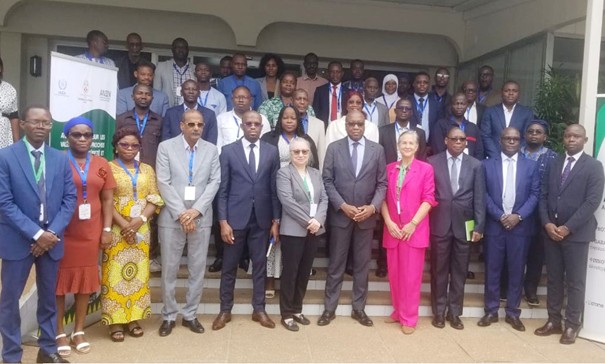
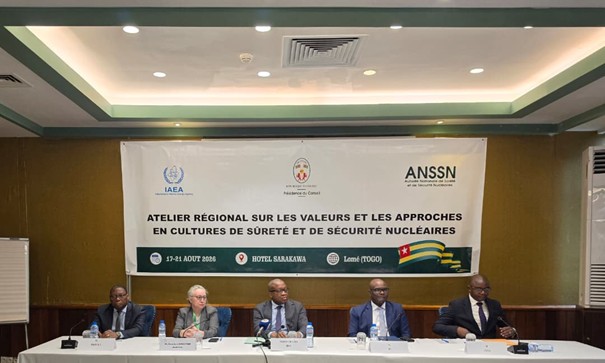
Lomé, August 2026: The National Nuclear Safety and Security Authority (ANSSN) hosted a regional workshop on values and approaches regarding nuclear safety and security cultures at the Hotel Sarakawa from August 17 to 21, 2026. Organized by the International Atomic Energy Agency (IAEA) as part of the Regulatory Infrastructure Development Project for African countries (RIDP-AFR), the workshop brought together delegates from eleven African countries united by a shared conviction: that nuclear safety and security rely above all on a shared culture.
Eleven African countries meet in Lomé
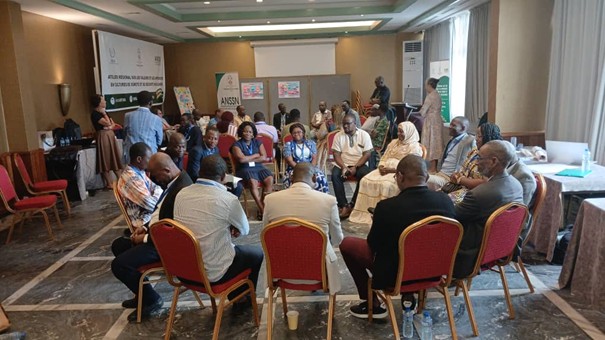
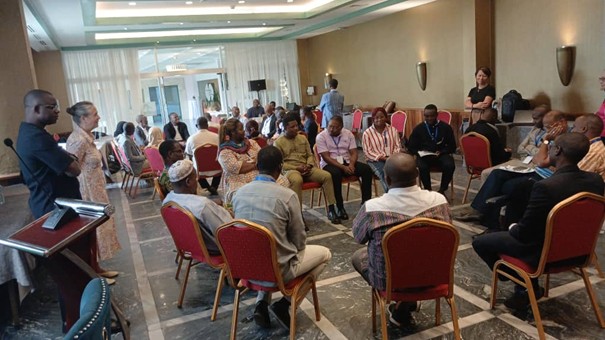
The workshop was attended by 33 participants: delegates from Burkina Faso, Burundi, the Central African Republic, the Democratic Republic of the Congo, Côte d'Ivoire, the Democratic Republic of the Congo, Gabon, Mali, Mauritania, Niger, the Democratic Republic of the Congo and Togo, as well as four IAEA representatives, including two international experts from Canada and Burkina Faso.
The delegations included regulatory authorities, universities, ministries in charge of energy, health and safety, emergency services and the Women in Nuclear (WiN) association. This diversity fuelled rich exchanges on how the culture of safety and security is lived on a daily basis in each institution.
The choice of Lomé reflects the progress made by Togo in nuclear governance: adoption of Law No. 2020-006 of 10 June 2020, operationalization of the ANSSN since 2021, accession on August 14, 2026 to the four fundamental IAEA conventions, and election of the country to the IAEA Board of Governors for the period 2025-2027.
An opening under the sign of culture
The opening ceremony, held on August 17, 2026, was chaired by the Minister Delegate in charge of Energy and Mineral Resources. In his welcoming remarks, the Permanent Secretary of the ANSSN recalled Togo's recent progress and the increased responsibility that the country has placed since its election to the IAEA Board of Governors:
"Nuclear safety and security is not limited to legislation or technical equipment. It is based above all on a culture, i.e. on a set of values, behaviours and attitudes shared by all actors, at all levels of responsibility. »
The Minister Delegate, for his part, underlined the importance of this workshop for the development of the country and the region:
"The culture of nuclear safety and security is not an end in itself. It is a means, a tool for development, a factor of confidence for the population and the international community. »
He invited the participants to establish lasting contacts with a view to building an African network for nuclear safety and security.
Five days of participatory learning
Structured in five progressive days, from the acquisition of basic notions to the making of concrete commitments, the workshop favoured an interactive pedagogy: knowledge quizzes at the beginning and closing, dialogues in plenary, group work, "wall of challenges", appreciative inquiry, "fishbowl" exercise and mutual recognition session.
Led by IAEA experts, the work focused on:
- the importance of safety and the IAEA's ten fundamental safety principles;
- the basics of nuclear security and the international legal framework, including the Convention on the Physical Protection of Nuclear Material and its amendment and the Code of Conduct on the Safety and Security of Radioactive Sources;
- The interface between safety and security, their synergies and possible tensions;
- Human, technical and organizational factors (HTO) and the systems approach;
- Safety culture models, including Edgar Schein's three levels of culture and the ten characteristics of a strong safety culture.
Two case studies have anchored these concepts in practice: a nuclear fuel handling incident at a Finnish power plant, and a scenario of an unauthorized removal of a brachytherapy source of iridium-192. This second case highlighted the consequences of a lack of coordination between the authorities responsible for the safety and security of radioactive sources.
Concrete commitments for each country
At the end of the week, the results confirmed the achievement of the objectives set: measurable progression of knowledge between the initial and final quiz, development of action plans according to the "Who/When/What" model, formulation of individual and collective commitments, and strengthening of links between the countries represented, laying the foundations of an African regional network.
Participants made several recommendations, including:
- Follow up on six- and twelve-month action plans;
- To animate the regional network set up in Lomé in the long term;
- Continue the IAEA's technical support, in particular through advisory missions and future editions of the RIDP-AFR programme;
- Strengthen coordination at national level between the competent authorities for the safety and security of radioactive materials.
"Ambassadors" of the safety and security culture
The closing ceremony, on 21 August 2026, was chaired by Professor Mazamaesso TCHAOU, Permanent Secretary of the ANSSN. He stressed the importance of applying safety and security measures in all areas using radioactive sources, and thanked the IAEA, the experts and the commitment of the participants.
Professor TCHAOU invited each participant to become, within his institution, an "ambassador" of the culture of nuclear safety and security, recalling that this work does not stop in Lomé. He also reaffirmed Togo's willingness to strengthen regional and sub-regional cooperation with African countries that are still developing their capacities in this field.
For the ANSSN, the hosting of this workshop confirms Togo's growing role as a player in African cooperation in the field of nuclear safety and security, in the service of the protection of populations and the environment against the harmful effects of ionizing radiation.